How to measure pressure, identify common causes, and know when to call for help
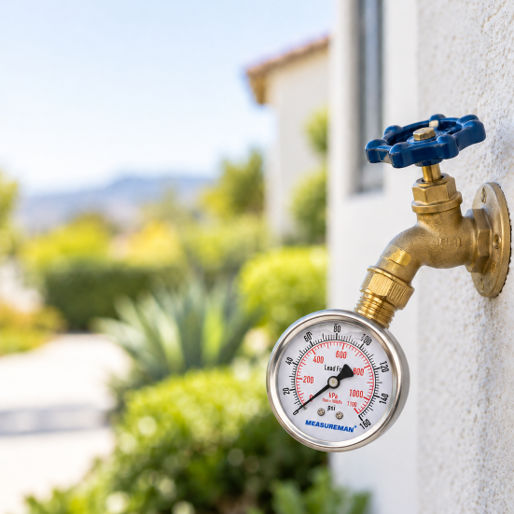
A pressure gauge attached directly to an outdoor hose bib gives a useful snapshot of household water pressure.
Low or high water pressure can be frustrating, but the first checks are usually simple. A pressure gauge, a quick look at the water meter, and a few observations around the home can help separate a single-fixture problem from a whole-house plumbing issue. Persistent pressure problems are commonly tied to the customer’s private plumbing rather than the public water system.
For many homes, 45 to 65 pounds per square inch is a typical operating range. Residential plumbing commonly treats 80 psi as the upper limit. OMWD system pressure can exceed 150 psi in some areas, so a properly working household pressure regulator may be necessary to reduce pressure before water enters the home.
Water pressure at a glance
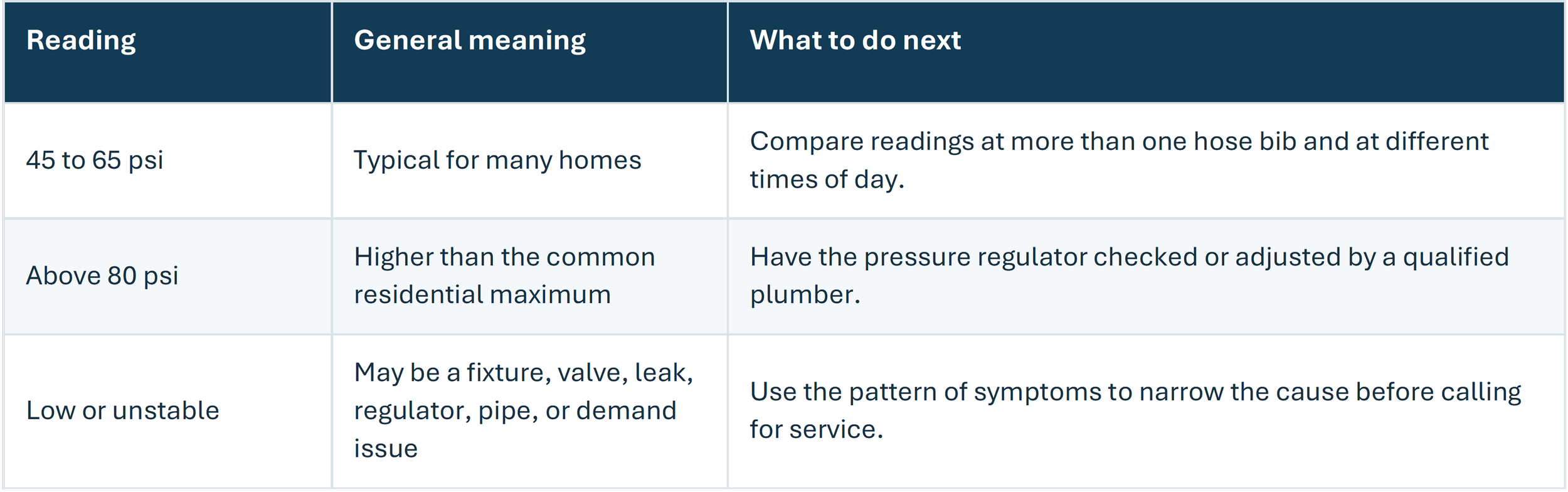
Why water pressure changes
Water pressure comes from the physical weight of water moving through the distribution system. Gravity is the most efficient way to deliver water, so storage tanks are usually located at elevations above the homes and businesses they serve. In some areas, pumps are also needed to move water through the system or uphill to higher pressure zones.
Elevation matters. Homes at different elevations may experience different pressure even when they are in the same general neighborhood. OMWD operates multiple pressure zones, and the zone serving a property helps determine the pressure available at the meter.
Time of day can matter as well. Storage tanks normally refill at night when water use is lowest, leaving them better prepared for higher daytime demand. Fire emergencies, construction activity, or unusually high demand can slow tank refill and temporarily lower pressure. Pressure can also feel higher in the early morning and lower later in the day as neighborhood water use increases.
How to check household water pressure
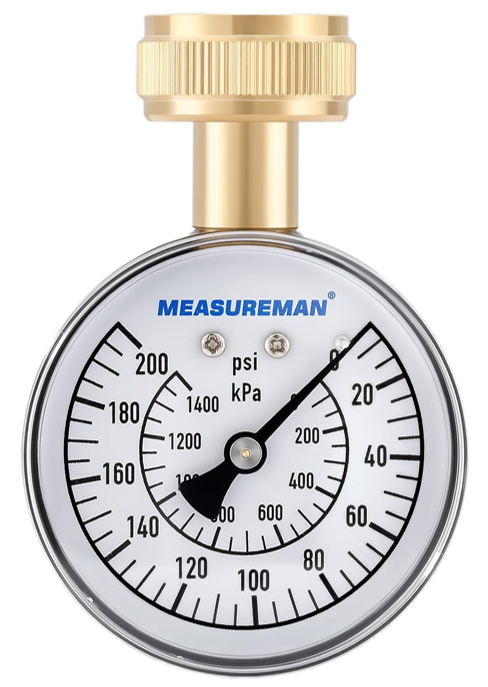
Use an inexpensive hose-bib pressure gauge with a scale high enough to show the full reading.
Purchase a water pressure gauge from a hardware or building-supply store. Choose an outside hose bib, remove any hose or accessory, and attach the gauge directly to the threaded outlet. Make sure the connection does not leak.
Turn off irrigation, faucets, showers, washing machines, dishwashers, water softener regeneration, pool autofill, and other active water uses.
Record the static pressure with no water flowing inside the home.
Measure at several hose bibs if possible, including one near the front of the house and another farther downstream.
Repeat the test while water is flowing inside the home. A large drop can point to a partially closed valve, clogged piping, a restriction, or a weak regulator.
Compare readings at different times of day. A small change is normal. A consistent pattern helps distinguish normal demand changes from a property-side problem.
A pressure drop of about 5 psi during a comparison test is generally acceptable. A larger drop may signal a restriction or another condition that deserves closer inspection.
A simple diagnostic sequence
Start with the pattern
One fixture. If the problem affects only one faucet, shower, or appliance, start locally. Make sure the fixture valve is fully open. Remove and clean the faucet aerator, showerhead, filter, or screen. Mineral deposits often restrict flow and can usually be removed by soaking removable parts in vinegar.
Several fixtures or the whole house. Check the meter, both main shutoff valves, the pressure regulator, visible plumbing, and any water-treatment equipment. A pressure problem that has existed for days or weeks is often connected to the property’s plumbing.
Irrigation only. If indoor pressure is normal but the irrigation system performs poorly, the problem may be within the irrigation system. Check schedules, valves, filters, sprinkler screens and nozzles, pipe sizing, and recent irrigation modifications. Old, damaged, clogged, or maladjusted sprinkler heads can reduce performance even when household pressure is adequate.
Check for a leak
Turn off every water-using device inside and outside the property, including irrigation, pool autofill, reverse-osmosis equipment, and water softeners. Locate the water meter, normally near the front of the property, and watch the customer side of the meter. If the sweep hand or leak indicator continues to move, water may be flowing somewhere on the property. The customer is responsible for locating and repairing leaks on the customer side of the meter.
Check the valves
A partially closed valve can reduce pressure throughout the property. Confirm that the meter valve and the home’s main shutoff valve are fully open. Some pressure complaints begin after plumbing work because a valve was not reopened completely. Valves can also become clogged or damaged, and an apparently open handle does not always confirm full internal flow.
Check the pressure regulator
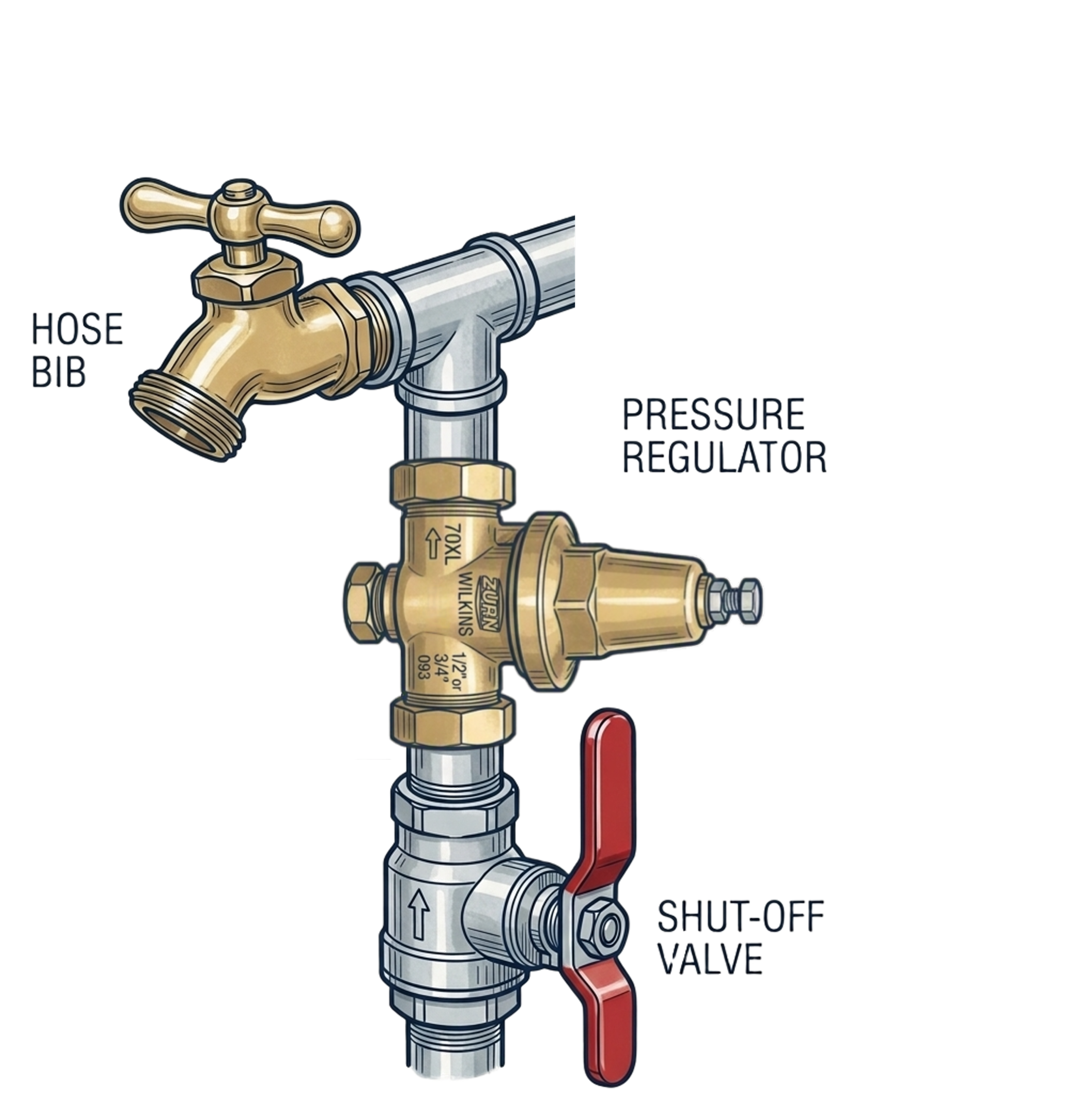
A common arrangement places the hose bib near the pressure regulator and main shutoff valve.
The household pressure regulator is commonly located near the front of the house, often on the same inlet pipe as an outdoor hose bib and before the plumbing branches into the home. It may also be in a garage, crawl space, basement, or utility area. Some properties have more than one regulator, especially when additions, irrigation systems, or separate pressure zones have been installed.
A regulator reduces higher system pressure to a safer household setting. Most OMWD customers need a regulator because public-system pressure can be considerably higher than indoor plumbing should receive. A regulator can be adjusted, but adjustment should be handled carefully. If it cannot hold pressure, causes a large drop under flow, or has reached the end of its service life, a plumber may need to repair or replace it.
Common factors that affect water pressure
Ground elevation and the OMWD pressure zone serving the property
Faulty adjustment, wear, or blockage in the pressure regulator
A water leak on the customer’s property
Mineral deposits inside pipes, hoses, aerators, showerheads, filters, or screens
Several household fixtures or appliances using water at the same time
Landscape irrigation scheduling, valve condition, sprinkler selection, and system design
Recent plumbing modifications inside or outside the home
A water softener, filter, or treatment system that is clogged, regenerating, bypassed incorrectly, or left with a valve partly closed
· A main, meter, fixture, or irrigation valve that is not fully open
· A change in pipe size or a restrictive point-of-connection modification
· Time of day and changing neighborhood demand
When to call OMWD and when to call a plumber
Ask a nearby neighbor whether their pressure changed at the same time. If multiple nearby properties have a sudden pressure problem, or if the change followed known utility work, contact OMWD. The District can help determine whether system conditions or nearby work may be involved.
If the issue affects only your property, has lasted for days or weeks, or points to a regulator, valve, leak, mineral restriction, irrigation component, water softener, or internal piping problem, contact a qualified plumber or the appropriate irrigation professional. OMWD maintains the public system through the meter; the customer is responsible for private plumbing and leaks on the customer side of the meter.
Frequently asked questions
What is water pressure?
Water pressure is the force that moves water through the distribution system and the plumbing on your property. OMWD primarily uses elevation and gravity, with pumping where needed, to deliver water across its service area.
How can elevation affect water pressure?
Storage tanks are generally placed above the areas they serve so water can flow downhill by gravity. A home at a lower elevation may receive more pressure than a home at a higher elevation. Because elevations vary, OMWD uses different pressure zones, and some areas require pumping uphill.
What amount of pressure is considered normal?
For many homes, 45 to 65 psi is a typical operating range. Residential plumbing commonly uses 80 psi as the maximum pressure before regulation or corrective action is needed. Actual pressure at the meter can be higher, depending on elevation and pressure zone.
Can OMWD system pressure be higher than household plumbing pressure?
Yes. OMWD pressure exceeds 150 psi in some areas. A household pressure regulator reduces that incoming pressure to a suitable level for private plumbing.
How can I check my water pressure?
Attach a pressure gauge directly to an outdoor hose bib with the hose removed. Test with all water use off, then compare readings at several hose bibs and while water flows inside the home. Changes under flow can reveal restrictions, closed valves, or regulator trouble.
Why do some homes have a pressure regulator and what does it do?
A regulator protects household plumbing and fixtures from excessive incoming pressure. It lowers public-system pressure and helps maintain a steadier pressure inside the home.
Where is my pressure regulator?
It is often near the front of the house on the incoming water line, sometimes close to an outdoor hose bib and before the plumbing branches. It may also be in a garage, crawl space, basement, or utility area. Some properties have more than one.
Should I adjust the pressure regulator myself?
The regulator may be adjustable, but improper adjustment can create excessive pressure or fail to correct a worn or blocked regulator. A qualified plumber should inspect, adjust, repair, or replace it when pressure is too high, too low, or unstable.
If I have a leak on my property, who is responsible?
The customer is responsible for finding and repairing leaks on the customer side of the water meter. OMWD is responsible for the public system up to the meter.
How can I detect a leak?
Turn off all indoor and outdoor water use, including irrigation, pool autofill, reverse-osmosis equipment, and water softeners. Watch the meter. Movement of the sweep hand or leak indicator can mean that water is still flowing somewhere on the property.
How can mineral deposits affect water pressure?
Mineral buildup can narrow openings in faucet aerators, showerheads, filters, sprinkler screens, hoses, and pipes. Remove and clean accessible parts. Soaking removable screens and aerators in vinegar can dissolve many deposits.
Why is water pressure sometimes higher in the early morning and lower during the day?
Neighborhood water use is usually lowest overnight and early in the morning. Demand rises when people shower, wash clothes, and irrigate. Tanks refill during lower-demand periods, while fire response, construction, or heavy daytime demand can slow refill and temporarily lower pressure.
What if low pressure affects only one fixture?
The problem is usually local to that fixture. Check its shutoff valve, aerator, showerhead, filter, or screen for a partial closure, clog, damage, or mineral buildup.
What if low pressure affects all fixtures?
Check the meter and main valves, look for leaks, test the pressure regulator, and inspect water-treatment equipment. A whole-house problem that persists usually points to private plumbing and should be evaluated by a plumber.
What if the problem is only in the irrigation system?
Check irrigation schedules, valves, filters, screens, nozzles, and sprinkler condition. Confirm that the irrigation shutoff is fully open and compare pressure at an indoor fixture. If indoor pressure is normal, the restriction is likely within the irrigation system.
Can recent plumbing work change water pressure?
Yes. A valve may have been left partly closed, a smaller pipe or restrictive fitting may have been installed, or a regulator or water-treatment system may have been relocated or added. Review recent work when a pressure change begins suddenly.
Can a water softener affect pressure?
Yes. A clogged softener, a unit in regeneration, an incorrectly positioned bypass valve, or a partially closed valve can reduce flow and pressure. Bypass the unit according to the manufacturer’s instructions or ask a service professional to evaluate it.
When should I contact OMWD?
Contact OMWD when several nearby properties experience the same sudden change, when you suspect a public-system issue, or when you need help understanding the pressure available at the meter. For problems confined to private plumbing, contact a plumber.
OMWD | 760-632-4649 | Emergencies 760-753-6466 | olivenhain.com